Wearables & physical assets
Material and thermal researchSMART CLOTHING
Microclimate & textile interface
Garments that combine a comfortable textile layer with sensing, moisture routing and measured thermal behavior.
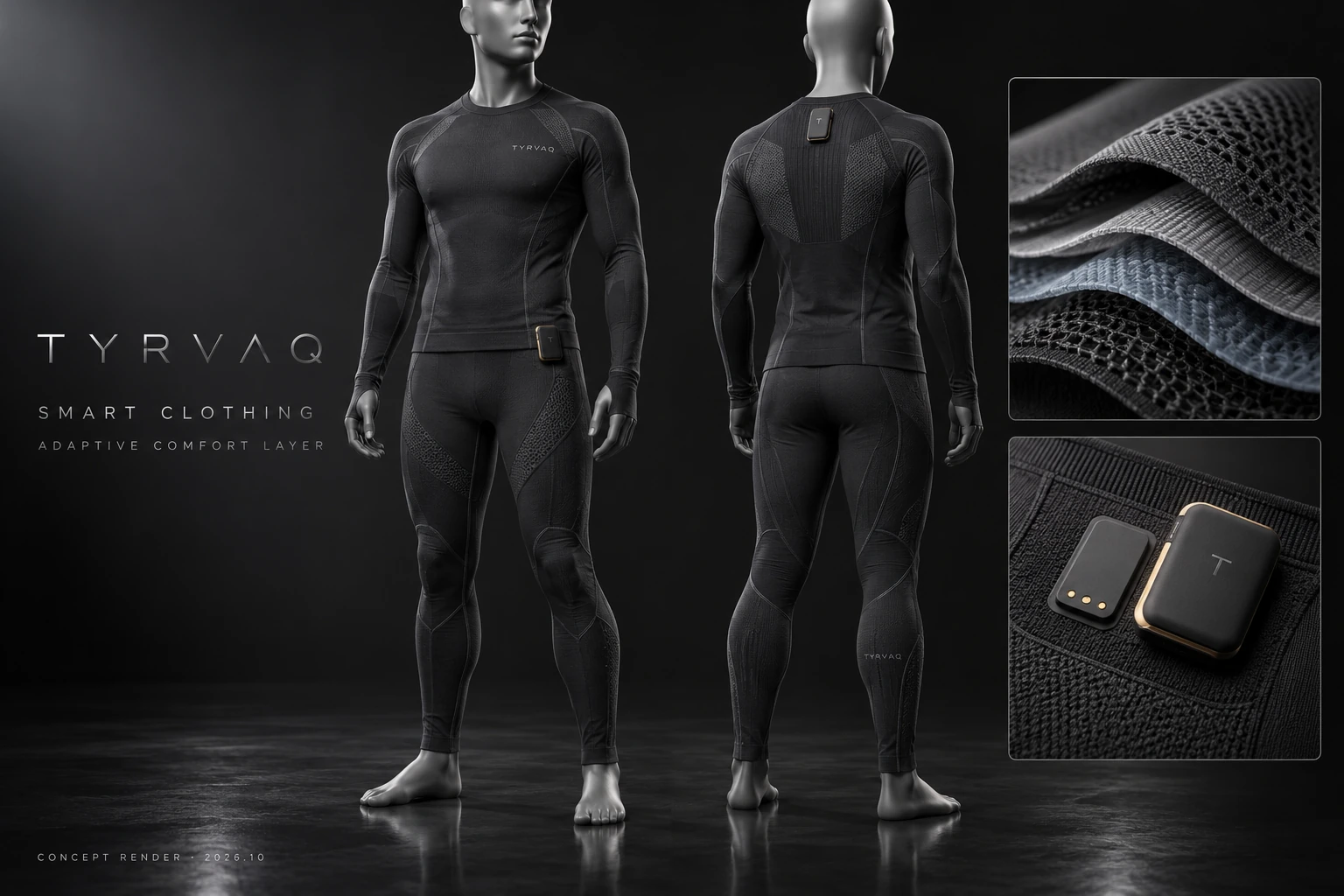
FIELD DOSSIER / TQ-07
Textile / microclimate
- Target mass
- 0.6–1.0 kg per set
- Target size
- Upper + lower garment
- Fit / configuration
- Proposed sizes XS–XXL
Dry textile set and removable sensing inserts; active cooling modules excluded.
Pattern dimensions vary by size. Cooling equipment adds a separate mass and energy budget.
CURRENT STUDIES & ORIGINAL REFERENCES
Every angle. Every detail.
Microclimate direction
The research options include phase-change materials, moisture routing and small thermoelectric elements. Cooling or heating must account for electrical input, heat rejection, skin contact and the intended environment.
Serviceable clothing
Textiles, removable electronics, washing, repair, pressure distribution and battery isolation need their own design and test plan. Clothing comfort and electronics survival use different thermal limits.
FROM COMPONENT TO CONFIGURATION
See SMART CLOTHING in context.
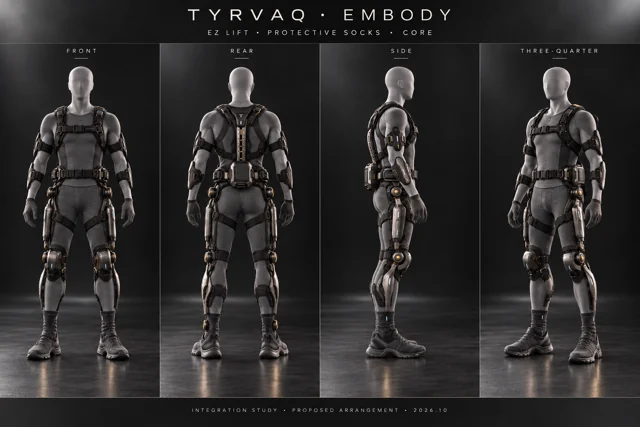
Connected roles
View architecture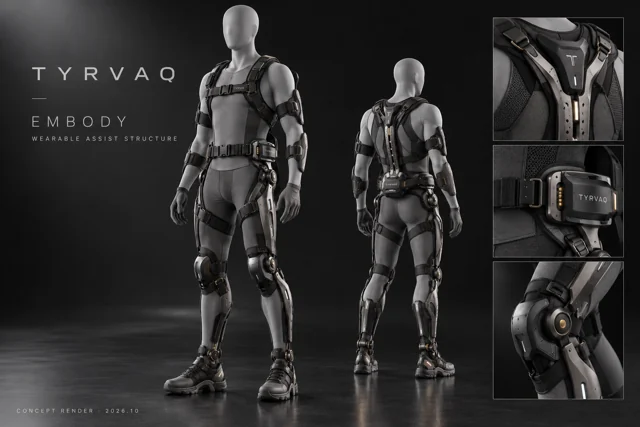 FOUR ANGLES
EMBODY
A body interface spanning haptic feedback, distributed sensing, smart garments and later mechanical assistance.
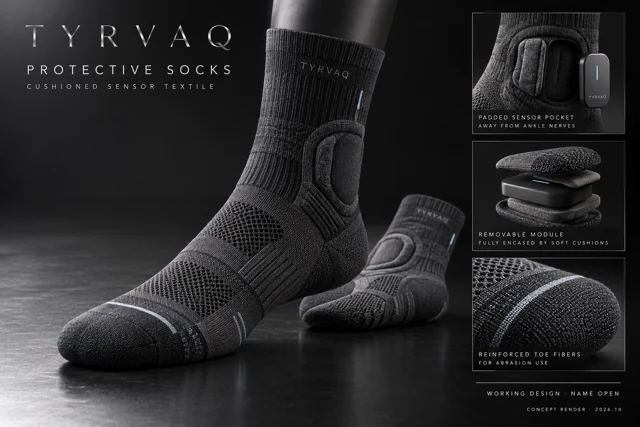 FOUR ANGLES
TYRVAQ SOCKS
A durable, cushioned sock concept focused on long standing, sports use and protection around the foot and ankle.
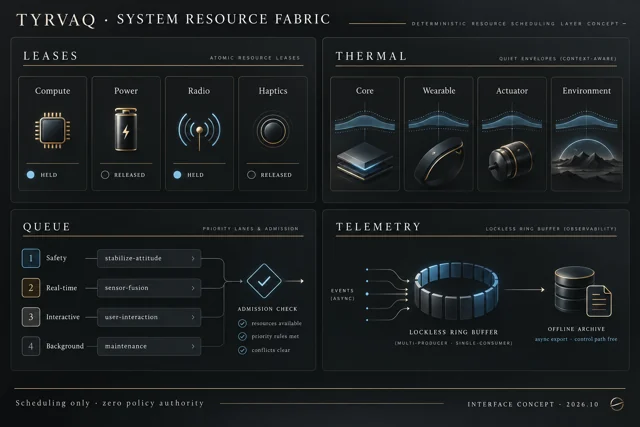 SYSTEM CONCEPT
SYSTEM RESOURCE FABRIC
A scheduler that checks authorized actions against timing, energy, storage and distinct thermal envelopes.
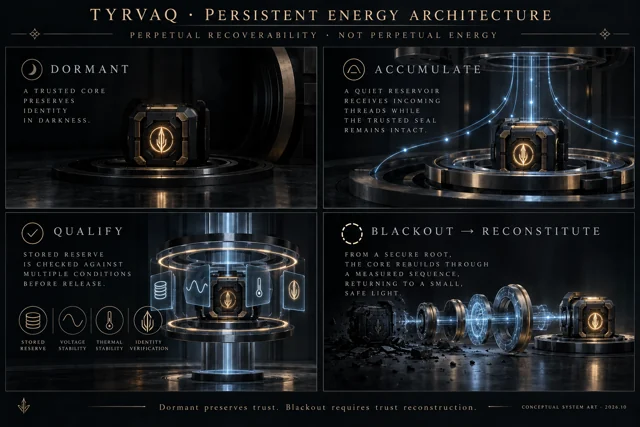 SYSTEM CONCEPT
PERSISTENT ENERGY ARCHITECTURE
Perpetual recoverability, not perpetual energy.